Thoughts from Suzuki Yuki (she/her), a multi-faceted director & producer
What does it mean to have community?
These days, it can mean having a certain number of followers. It could mean going to church every week, or being part of a fitness group, a board-game club, a queer collective, or any social group we return to regularly. Usually, we think of community as a group of people connected by shared interests, cultural backgrounds, identities, or experiences.
But why is community important? What does it actually give us?
Mutual support. A sense of belonging. Connection.
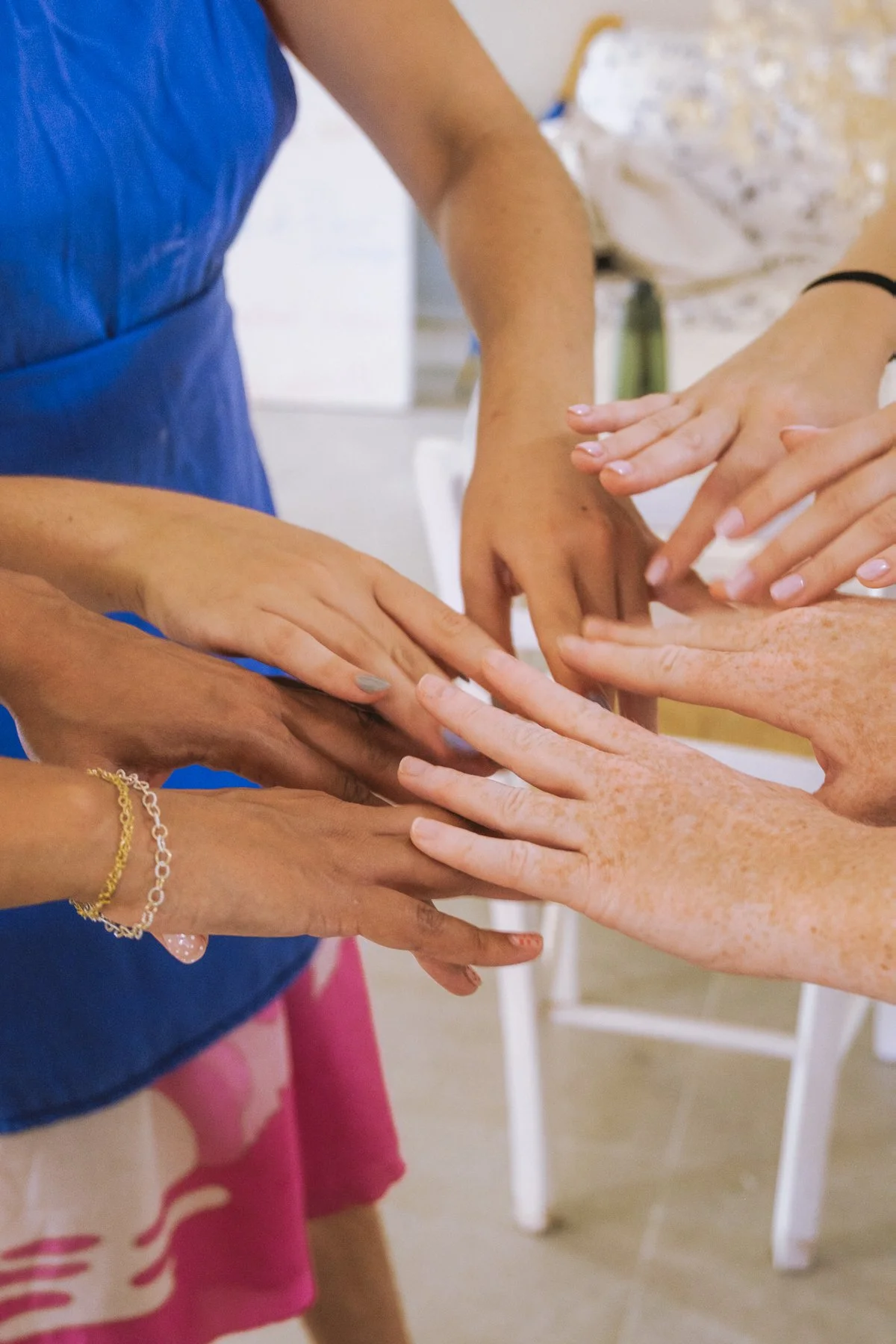
Humans are social beings. We want to be part of something larger than ourselves. We want to make connections, build bonds, and feel that there are people around us who understand us. “Safety in numbers,” I once heard someone say.
But at the end of the day, in my experience of the world, what I’ve come to understand is that having community is, in many ways, simply about feeling a little less alone.
It is that moment when someone sees a version of you that feels authentic and recognises something in it. Someone relates to you. Someone accepts you. Someone supports you.
Maybe that’s all any of us really want in this world: to be seen.
Particularly within the queer community, many of us grew up in homes or environments where we weren’t fully seen or accepted. Some of us never will be. So we can develop a deep hunger for somebody—anybody—to see us. To accept us. To want us.
And when we deeply desire something, especially when that desire comes from a place of deficit, it can drive us towards strange situations and environments that aren’t necessarily good for us. We can find ourselves staying in places that don’t feel right, accepting dynamics that don’t serve us, or contorting ourselves to maintain a sense of belonging.
Sometimes our bodies haven’t yet learned to recognise that something isn’t aligned with our hearts. Sometimes our minds tell us stories that keep us there. Sometimes, underneath it all, is a very old fear: If I leave, I’ll be abandoned. If I say no, I’ll be alone.
But perhaps there is another way.
If we can find the courage to be truly honest with ourselves—to acknowledge that we need people, and that sometimes our need for connection can drive us towards choices that don’t serve us—we can begin to change those patterns.
We can learn to show up for ourselves.
We can make it through the uncomfortable periods of loneliness rather than abandoning ourselves to escape them. We can discover that being alone is not necessarily the same as being abandoned. And perhaps, through surviving those moments, we develop a deeper capacity to show up for other people too.
That, to me, is where real community begins.
Not simply in gathering together, but in creating a space where we can genuinely belong. Where we can support each other when we need it, hold each other when we’re struggling, and empower each other when we’re feeling defeated.
In my personal experience, true community doesn’t necessarily come from living in the same neighbourhood, sharing the same interests, or even having the same identity.
It comes from being honest with ourselves about who we are and how we want to show up—for ourselves and for each other—while remaining committed to growing and expanding.
When we practice that kind of honesty, we create more room for other people to do the same. We become more capable of holding space for difference, complexity, contradiction, and change.
And maybe that is how community actually grows.
Not because we all belong to the same group, but because we each take responsibility for how we belong.
We show up. We tell the truth. We stay when it is uncomfortable, and we leave when staying means abandoning ourselves. We learn how to care for ourselves so that we can care for each other.
And in doing so, we teach and inspire others to do the same.
One person at a time, it creates a ripple.
Maybe that’s how we build communities that don’t just help us feel less alone, but actually help us survive—and thrive—together. Community maybe isn’t something to be “found” but something we participate in creating.